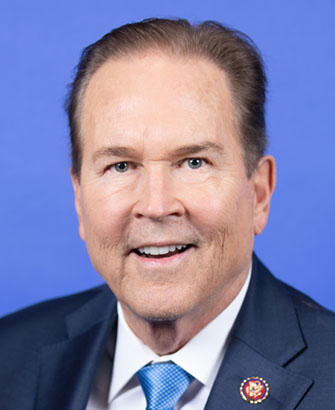
Inside Vern Buchanan's $261 Million Net Worth & Congressional Ranking
The intersection of politics and personal wealth is a topic that consistently captures public interest and scrutiny. In the halls of the U.S. Congress, where policy decisions shape the nation, the financial portfolios of elected officials often become subjects of intense public discourse. Among these figures, Representative Vern Buchanan stands out, not just for his legislative work but for his remarkable financial standing. As a prominent Republican from Florida, Buchanan's journey from a successful entrepreneur to one of the wealthiest members of Congress offers a fascinating case study into the dynamics of wealth accumulation and public service.
Recent estimates from Quiver Quantitative paint a clear picture of his significant financial prowess. As of June 29, 2025, Representative Buchanan's estimated net worth soared to an impressive $261.2 million, positioning him as the third wealthiest individual serving in the U.S. Congress. This staggering figure is not merely a testament to his past business successes but also reflects his continued active engagement in the financial markets.
Decoding Vern Buchanan's Net Worth: A Deep Dive into $261 Million
Understanding the layers behind Vern Buchanan's net worth requires looking beyond the headline figure. His substantial wealth is a mosaic built upon decades of astute business decisions and strategic investments. A significant contributor to his recent financial growth has been his activity in the stock market. Reports indicate that Buchanan generated an astonishing $11.9 million from the stock market in just the last month, a gain that underscores his active and apparently successful investment strategy. This rapid growth in specific periods highlights the dynamic nature of his portfolio and his ability to capitalize on market opportunities. For a more detailed breakdown of these impressive gains, explore Vern Buchanan's $11.9 Million Stock Market Gains & Wealth Growth.
Beyond these immediate gains, Buchanan's financial structure includes approximately $4.2 million invested in publicly traded assets. Furthermore, data derived from his Stock Act filings reveal an extensive trading history, with reported trades amounting to a substantial $43.9 million. These filings, mandated by law for members of Congress, provide a rare glimpse into the financial activities of elected officials, aiming to ensure transparency and prevent conflicts of interest.
However, the foundation of Buchanan's wealth was laid long before his entry into national politics. He is primarily known as a shrewd businessman, a reputation he cultivated over many decades. His entrepreneurial journey notably includes the establishment and ownership of numerous successful car dealerships. This background in diverse business ventures not only provided him with a robust financial base but also honed his strategic thinking and financial management skills – attributes that have clearly translated into his impressive personal wealth accumulation. To learn more about his entrepreneurial journey, delve into Vern Buchanan: Businessman to Congress's Third Wealthiest Member.
The Engines of Growth: Stock Market Prowess & Entrepreneurial Acumen
The remarkable trajectory of Vern Buchanan's net worth can be attributed to a powerful combination of active investment strategies and a deeply rooted entrepreneurial spirit. His reported $11.9 million in stock market earnings within a single month is not an everyday occurrence, even for seasoned investors. This figure suggests a sophisticated approach to market analysis and timely execution, potentially involving a diversified portfolio or strategic bets on high-growth sectors. It also brings into focus the intense scrutiny that high-volume trading by elected officials often faces, especially regarding potential access to privileged information – a concern the Stock Act aims to address by requiring timely disclosure.
Buchanan's financial success is a testament to the power of capital growth when coupled with astute decision-making. Investors, both novice and experienced, can glean insights from such examples. While not everyone has millions to invest, understanding the principles of diversification, market timing (or long-term holding), and risk management are universal. For instance, Buchanan's reported $4.2 million in publicly traded assets, distinct from his high-volume trades, might represent a core portfolio designed for steady, long-term growth, while the $43.9 million in trading data points to more active, shorter-term plays. This blended strategy, combining stable asset ownership with dynamic trading, could be a key to his sustained financial expansion.
Equally crucial to his wealth is his origin as a businessman. Having built and managed various enterprises, particularly his extensive network of car dealerships, Buchanan developed a profound understanding of economics, market demand, and operational efficiency. This entrepreneurial foundation provides a resilience that solely stock-market-driven wealth might lack. Business ownership often generates consistent cash flow, builds tangible assets, and provides a buffer against market volatility. It’s this blend of traditional business acumen and modern investment strategies that has propelled Buchanan to his position as one of Congress's financial heavyweights.
Congressional Finances: Campaign Trails and Legislative Priorities
While his personal wealth commands significant attention, it's also important to examine Vern Buchanan's financial activities within the political arena, specifically his campaign finance disclosures. According to his Q1 FEC disclosure, filed on April 15, 2025, Buchanan reported raising $200.4K. While this is a respectable sum, it ranked him 309th among his congressional peers for that period, indicating that his personal financial stature doesn't necessarily translate into top-tier campaign fundraising from external sources. Of these contributions, 18.4% originated from individual donors, suggesting a reliance on a broad base of support, albeit possibly complemented by PACs and other organizational contributions (though the specific breakdown isn't detailed in the provided context).
In terms of expenditures, Buchanan reported spending $81.4K during the same period, placing him 475th. This lower spending figure relative to his fundraising might suggest efficient campaign management or a strategic decision to conserve resources for later in the election cycle. Crucially, at the end of the filing period, he had a substantial $1.2 million cash on hand, ranking 206th. This healthy reserve provides a significant advantage for future campaign activities, enabling him to respond to political challenges or invest in outreach efforts without immediate financial constraints. This contrasts sharply with his personal wealth, showing a clear distinction between his private financial strength and his campaign's operational budget, though the former undoubtedly provides a safety net or perception of financial stability.
Beyond finances, Buchanan's legislative efforts reflect his priorities and interests. He has notably proposed bills such as the U.S. Bicycle Production and Assembly Act and the Alzheimer’s Law Enforcement Education Act of 2025. These legislative initiatives cover diverse areas, from promoting domestic manufacturing and potentially supporting economic sectors to addressing critical public health and safety concerns. It's an interesting aspect to consider how a lawmaker's personal background, whether in business or otherwise, might inform the types of legislation they champion. For instance, a bill promoting domestic production could align with a general pro-business philosophy, while the Alzheimer's act demonstrates engagement with broader societal welfare issues.
The Broader Context: Wealth in Congress & Public Perception
Vern Buchanan's status as the third wealthiest member of Congress places him in an elite financial tier within an already affluent legislative body. The presence of significant personal wealth among elected officials often sparks a debate about its implications for public service. On one hand, some argue that wealthy individuals are less susceptible to financial pressures or lobbying influences, as their personal fortunes provide a degree of independence. They might also bring valuable business acumen and economic understanding to legislative debates.
On the other hand, substantial wealth can raise concerns about potential conflicts of interest, particularly when policy decisions could directly or indirectly impact their financial holdings. This is precisely why the Stock Act and other financial disclosure requirements are in place: to ensure transparency and accountability, allowing the public to assess whether lawmakers' decisions align with public interest or private gain. While Buchanan's extensive disclosures offer insight, they also highlight the constant vigilance required in public office.
From a public perception standpoint, the wealth of politicians often fuels discussions about economic inequality and the representation of ordinary citizens. Voters might question whether individuals with multi-million-dollar portfolios can truly understand or empathize with the financial struggles of average Americans. However, it's also a reality that many successful professionals from various fields – including business, law, and medicine – enter politics, often bringing with them substantial personal assets. The challenge for these wealthy legislators, like Buchanan, is to demonstrate that their focus remains squarely on their constituents' welfare, rather than the enhancement of their own fortunes.
Conclusion
Representative Vern Buchanan’s estimated net worth of $261.2 million firmly establishes him as one of the most financially influential figures in the U.S. Congress. His journey, marked by a highly successful career as a businessman and sustained by dynamic stock market investments, offers a compelling narrative of wealth accumulation alongside public service. From his considerable stock market gains to his substantial campaign war chest, Buchanan's financial landscape is as complex as it is impressive. His position as the third wealthiest member of Congress underscores the significant financial resources present within the nation's legislative body and fuels ongoing discussions about transparency, accountability, and the intersection of personal wealth with public duty. As discussions around financial disclosure and ethical governance continue, figures like Vern Buchanan remain central to understanding the evolving dynamics of wealth in American politics.
